Information Package / Course Catalogue
Eskişehir Osmangazi University
-
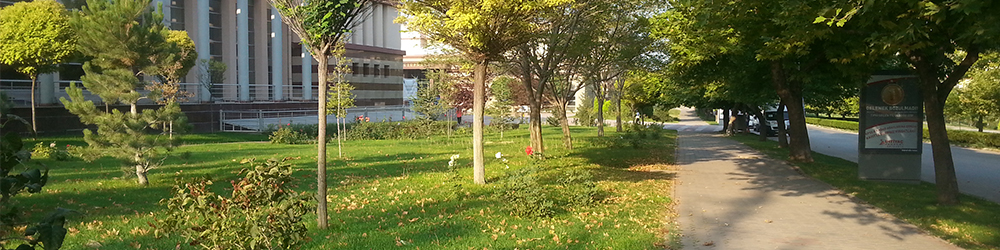
Walking Area
-

Library
-
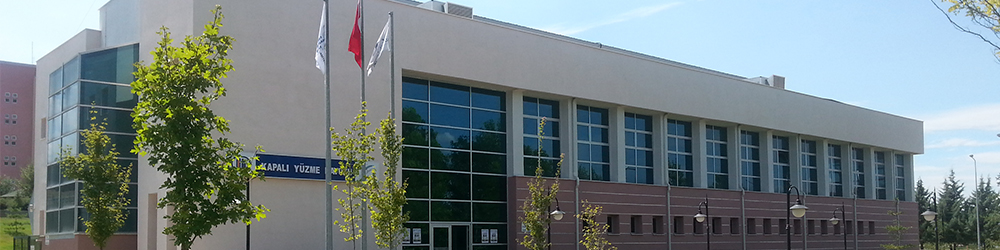
Indoor Swimming Pool
-

Rectorate Building
-

Faculty of Education
Master's Degree Program in Philosophy And Religious Studies
1. General Information
The Department of Philosophy and Religious Studies focuses on examining diverse schools of thought that have emerged throughout the history of ideas, the transformations these ideas have brought about in contemporary individuals and societies, and the debates surrounding them. Its research areas include the history of philosophy, Islamic philosophy, philosophy of religion, logic, religious education, sociology of religion, psychology of religion, and the history of religions. The department not only studies the intellectual heritage of the past but also aims to explore contemporary intellectual movements.
2. Qualification Awarded
Students who successfully complete the program and meet all program requirements are awarded a Master’s Degree in Philosophy and Religious Studies.
3. Level of Qualification
Master’s Degree
4. Admission and Registration Requirements
Applicants must meet the following criteria:
-
A bachelor’s degree,
-
A valid score from the Turkish Graduate Education Entrance Examination (ALES),
-
For international students (except those educated in Türkiye): a TÖMER certificate demonstrating Turkish proficiency at the C1 level,
-
Successful completion of the Oral Scientific Examination (Interview).
5. Recognition of Prior Learning
Students who wish to transfer credits from previously completed coursework or special student status must apply to the institute within the first four weeks of the semester in which they enroll. Applications should include a petition to the department chair, an official transcript, and approved course descriptions. Transfer requests are finalized by the decision of the Institute Administrative Board.
6. Qualification Requirements and Regulations
Students must complete at least 27 local credits, including a Seminar course, and fulfill a minimum of 120 ECTS credits. They must not receive FF, DZ, or YZ grades, must successfully complete all coursework, and must obtain a minimum GPA of 3.00/4.00. Students are also required to prepare a thesis related to their field and successfully defend it before an appointed jury. Those who meet all requirements are awarded a Master’s diploma in Philosophy and Religious Studies.
7. Program Profile (Objective)
The program aims to cultivate a scientific perspective in the field of Philosophy and Religious Studies; to produce academic knowledge within relevant disciplines; to share this knowledge in national and international scholarly settings; and to encourage critical thinking, intellectual curiosity, open-mindedness, and the development of a deep understanding of oneself, others, and the world.
8. Program Learning Outcomes
-
Students gain the ability to explain, interpret, and compare religious phenomena in diverse historical, social, and cultural contexts.
-
Students learn various theories and approaches to the nature and meaning of religion across academic fields such as religious studies, philosophy, psychology, and sociology.
-
Students analyze and interpret the intersections of religion with other cultural dimensions such as science, politics, ethics, education, art, and popular culture.
-
Students critically analyze significant questions and issues shaped by the intellectual heritage of religious tradition.
-
Students gain knowledge and insight into fundamental concepts and methods of the social sciences—such as philosophy, sociology, and psychology—to explain religious phenomena.
-
Students acquire introductory knowledge of major figures and philosophical approaches that shaped the history of Islamic philosophy and their interaction with other fields of religious studies.
-
Students develop an understanding of how philosophy and religion contribute to addressing concerns across different disciplines and everyday life.
-
Students learn to identify, analyze, and evaluate arguments, thereby developing critical thinking and critical reading skills in both oral and written expression.
-
Students access and distinguish primary and secondary sources in the field; select appropriate sources for research topics; and report their research findings.
-
Students specialize in interdisciplinary study by learning the elements and forms of religious experience such as beliefs, rituals, symbols, institutions, oral and written narratives, ethical systems, communities, practices, and material culture.
-
Students conduct an independent research project and produce an original, valid, and meaningful thesis supported by appropriate academic sources.
9. Occupational Profiles of Graduates
Graduates of the Master’s Program in Philosophy and Religious Studies may work more competently in the fields of education and religious services. They may also find employment as Research Assistants or Lecturers in faculties such as Theology, Islamic Sciences, Arts and Sciences, Humanities and Social Sciences, Education, and Social and Behavioral Sciences.
10. Access to Higher Degree Programs
Students who successfully complete the Master’s program and meet the necessary requirements are eligible to apply for the PhD Program in Philosophy and Religious Studies. They may also apply to PhD programs in other disciplines if they fulfill the respective admission requirements.
11. Exams, Assessment and Evaluation
Attendance is compulsory in graduate programs. Students whose attendance rate is below seventy percent in theoretical courses and below eighty percent in applied courses cannot take the final exam of the relevant course and are considered unsuccessful. They repeat the failed courses. The success level of the student is measured by the studies and / or midterm exams to be held during the semester and the final studies and / or exams at the end of the semester. For each course, the proportions of the studies and midterm exams during the semester and the final exam to be included in the success grade are determined by the faculty member at the beginning of the semester and announced in the student information system. Except for the specialization course, seminar course and thesis studies, the rates determined for the midterm and final evaluations of the other courses cannot be less than 40% for each. In distance education, this rate is regulated according to the relevant legislation. The success grade for each course is calculated over 100 points and letter grades are determined according to the table below.
|
Master Program |
|||
|
Success Grade |
Letter Grade |
Coefficient |
Success Degree |
|
90 – 100 |
AA |
4,00 |
PERFECT |
|
80 – 89 |
BA |
3,50 |
VERY GOOD |
|
75 – 79 |
BB |
3,00 |
GOOD |
|
70 – 74 |
CB |
2,50 |
GOOD-ADEQUATE |
|
65 – 69 |
CC |
2,00 |
SUFFICIENT |
|
64 ve below |
FF |
0,00 |
FAIL |
12. Graduation Requirements
Graduation requirements are as described in the "Qualification Requirements and Rules" section.
13. Mode of Study (Full-time, e-learning)
Full Time
Note: Unless the University Executive Board decides otherwise, trainings are conducted face-to-face.
14. Address and Contact Information
Head of Department: Prof. Dr. Abdüllatif TÜZER
E-mail: atuzer@ogu.edu.tr
Tel: +90 (222) 239 37 50 - 6052
Erasmus Coordinator: Assoc. Prof. Dr. Aybiçe TOSUN SUVÜT
E-mail: atosun@ogu.edu.tr
Tel: +90 (222) 239 37 50 - 6073
Eskisehir Osmangazi University Faculty of Theology
Address: Büyükdere Mahallesi Atatürk Bulvarı T.C. Eskişehir Osmangazi University Meşelik Campus Faculty of Theology Odunpazarı / ESKİŞEHİR PK:26480
Telephone: +90 (222) 239 37 50 - 6000 (Dean's Office) - 6014 (Department Secretariat)
E-mail: ilahiyat@ogu.edu.tr
15. Program Facilities
The Department of Philosophy and Religious Studies has 4 Professors, 5 Associate Professors, 5 Assistant Professors, and 1 Doctor Lecturer. Department meetings and seminars are held in the Faculty of Theology Meeting Hall and in the Meeting and Seminar Rooms of the ESOGÜ Institute of Social Sciences.16. Academic Staff
Department of History of Philosophy
Prof. Dr. Abdüllatif TÜZER
Department of Philosophy of Religion
Assoc. Prof. Dr. Abdülhan ÜNLÜSOY
Department of Islamic Philosophy
Prof. Dr. Kamil SARITAŞ
Department of Logic
Assoc. Prof. Dr. Şerefettin ADSOY
Department of History of Religions
Asst. Prof. Dr. Aynur ÇINAR
Dr. Lecturer Ömer Faruk KALINTÜRK
Department of Psychology of Religion
Prof. Dr. Mustafa KOÇ
Asst. Prof. Dr. Durali KARACAN
Department of Sociology of Religion
Prof. Dr. Ahmet Özalp
Assoc. Prof. Dr. Yılmaz ARI
Asst. Prof. Dr. Betül AKGÖL
Department of Religious Education
Assoc. Prof. Dr. Aybiçe TOSUN SÜVÜT
Assoc. Prof. Dr. İshak TEKİN
Asst. Prof. Dr. Ayşe YORULMAZ
Asst. Prof. Dr. Kübra YILDIZ